Read every project in the same order
No two developers present a project the same way. You learn one company's layout, then start again with the next.
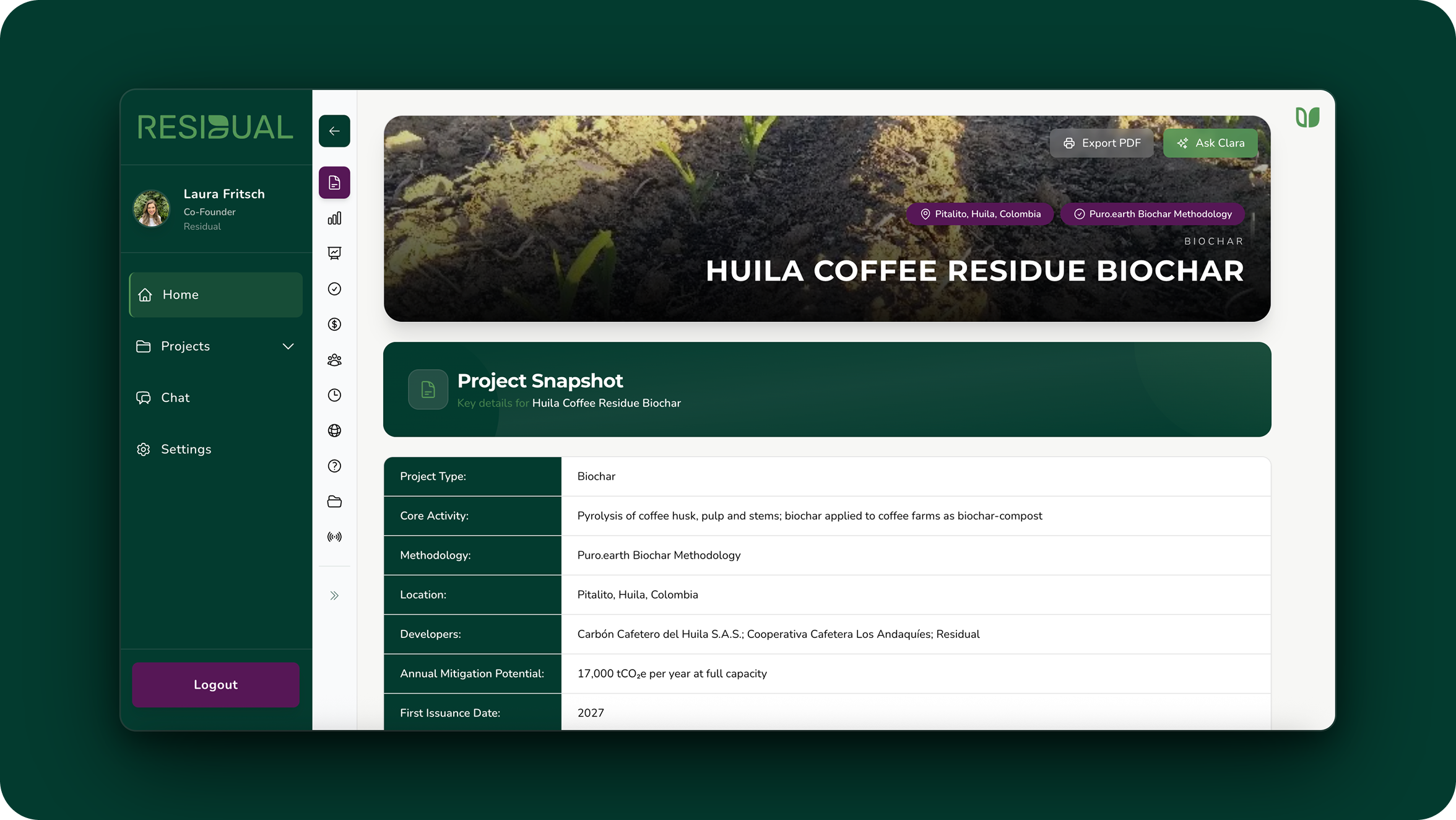
Every Residual project is published in one shape: the same snapshot at the top, and the same eleven sections underneath, always in the same order. Learn it once and every project after that reads faster, because you already know where to look. That is slower for us and faster for you; it is a trade we will make every time.
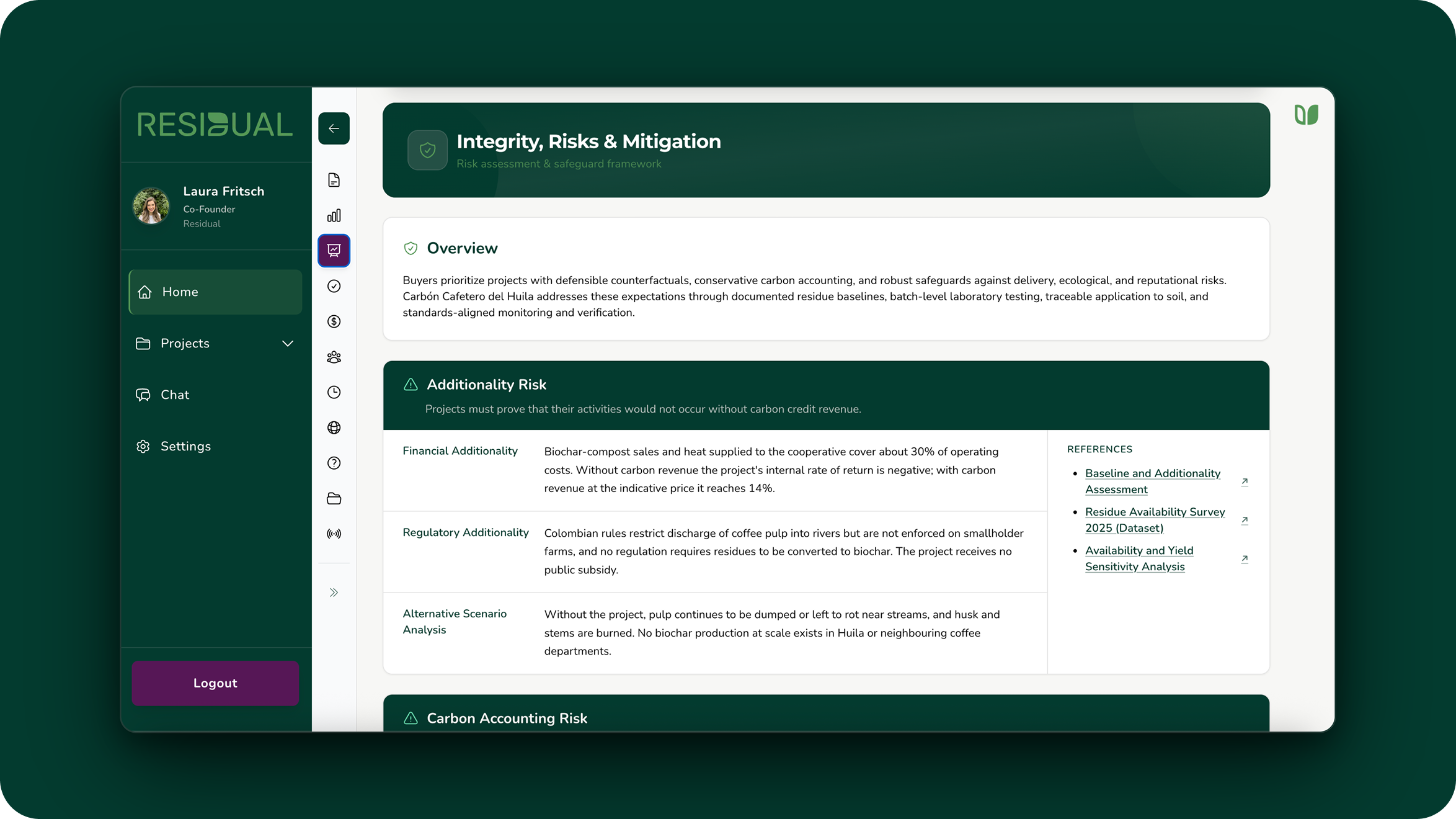
Additionality sits near the front, because that is where most reviewers start. You get the site selection, the baseline, and the reason the land stays degraded without carbon finance, without going hunting through a PDD.
See the risks before you ask about them
Risk is where diligence stalls, and it is where most developers go quiet.
Every risk is listed with its mitigation and the document behind it, including what is still unresolved. Your reviewers would find those issues anyway. Finding them in week six, after the time is spent, is what kills a deal; finding them in minute two is just information.
Price a purchase before you ask for a quote
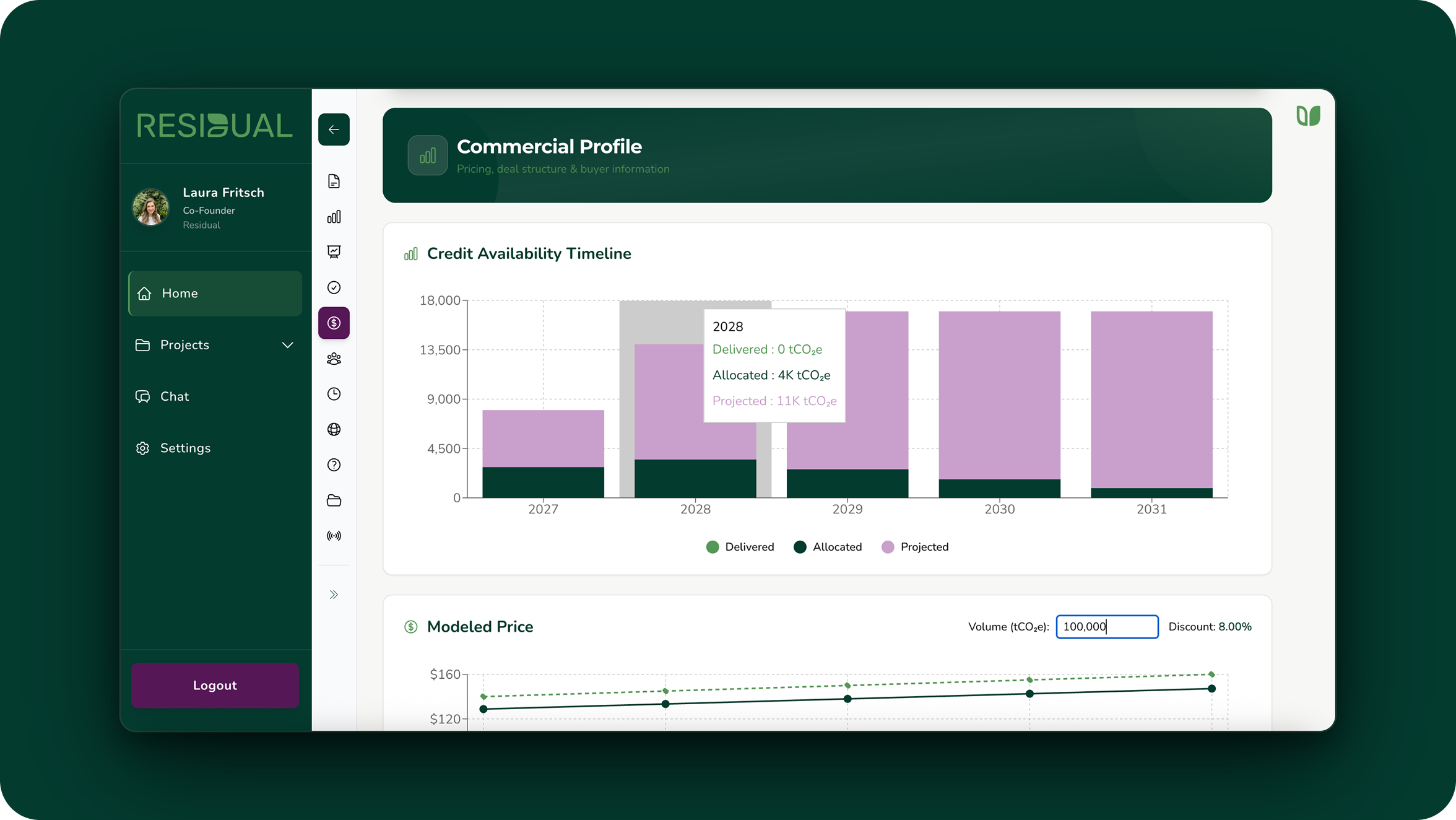
Price usually arrives last, after a buyer has spent weeks earning it. That order costs both sides: you cannot screen a project without a number, and we cannot have a serious conversation until you have one.
So the numbers are on the page. Available volume is charted by vintage and split into delivered, allocated, and projected. The modelled price moves with volume, so you can see what a larger order costs. The contracting structures are there too: forwards, multi-year offtakes, prepayment, and spot from 2029.
Ask Clara for answers
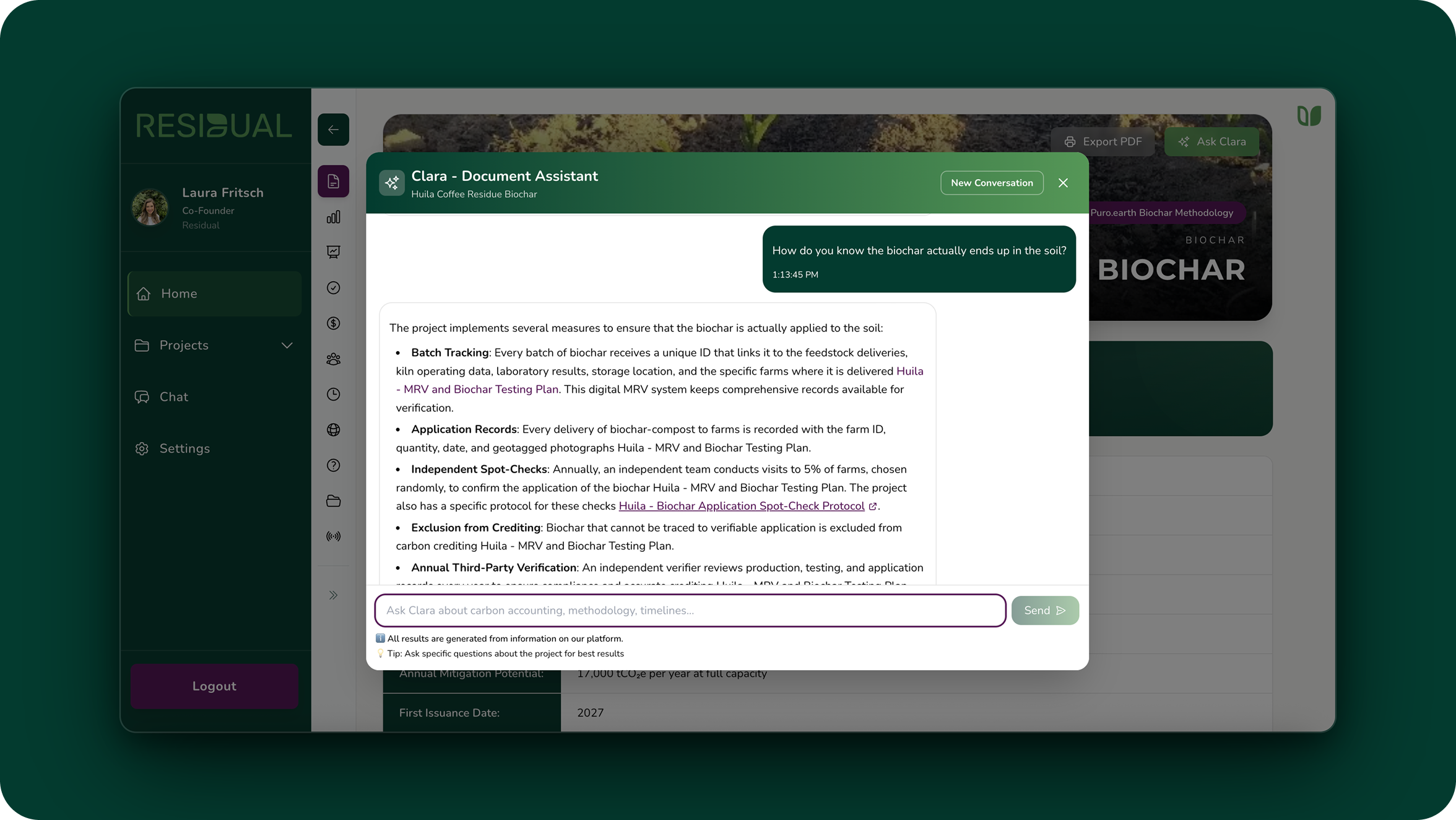
Some questions cut across the project page and the data room at once. Clara, the Portal's AI assistant, reads both and answers in the Portal.
Every answer names the section it came from, so you can check the source yourself.
Build the portfolio before you commit to it
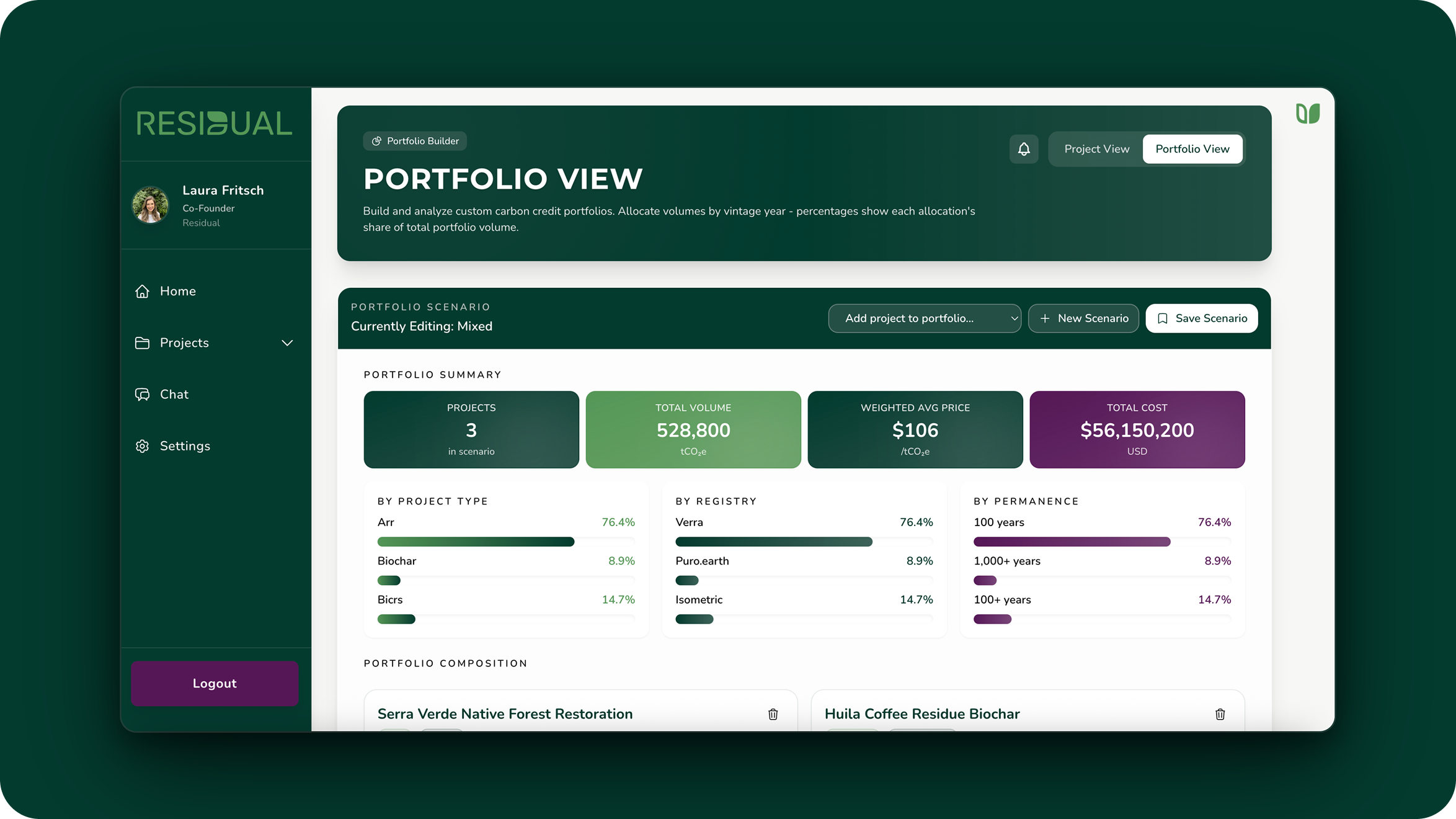
Most buyers are not buying one project. Portfolio View lets you allocate volume across projects and vintages; weighted average price, total cost, and the split by project type, registry, and permanence all update as you build.
You can test a whole purchase against your internal cost of carbon and your delivery window before you commit anyone to diligence.
What is live today
The Portal is live now, with access by request.
Project pages go up as each project comes through feasibility and design, so what you see today is the start of the set, not the whole of it. A financier-facing view of the same material is in development.
Residual is working toward 5 million tonnes of investment-grade carbon removal a year by 2030. Projects reach that scale only as fast as buyers and financiers can get comfortable with them; the Portal exists to shorten that step.